Is Mak Tok Still in Business? (2026 Update)
Still after Mak Tok?We have not confirmed a current listing, so this searches Amazon for you.
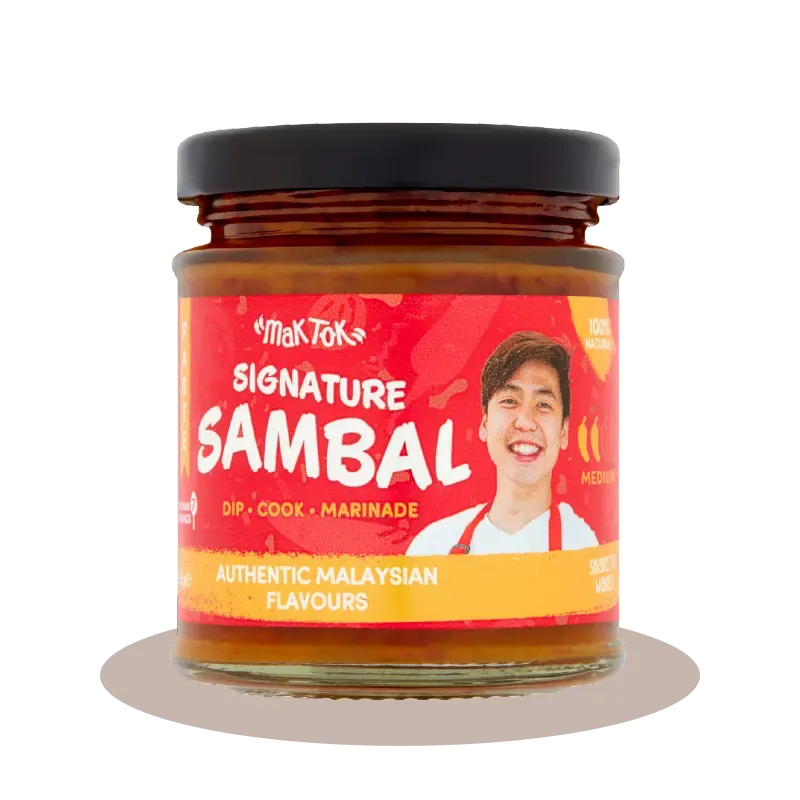
Look for Mak Tok on AmazonFull story →Will Chew walked into series 17, episode 3 with his mother's sambal recipe from Malaysia, a pitch that lived or died on taste rather than a complicated business model to explain.
It is easier to find this chilli paste today than it was on the night the episode aired.
A big slice of equity for a small cheque
Chew wanted £60,000 for a hefty 33% of the business, and Sara Davies funded the full amount with no changes to the terms. Trading away a third of a company for that size of cheque generally signals a founder who valued a Dragon's name on the deal more than holding tightly onto ownership.
Davies made her name on the panel picking founders in hands-on product categories she had built her own career inside, and a chilli paste rooted in one family's kitchen fit squarely into what she has always gone for.
From a home kitchen to thousands of jars a day
According to trade press, the operation has moved into a dedicated factory space now churning out several thousand jars a day, precisely the kind of unglamorous, expensive scaling that Den money is supposed to make possible, and that plenty of food founders never actually get to.
The range has since landed supermarket listings in Britain and reportedly reaches customers as far off as the UAE, plus Hong Kong and New Zealand, a jump that most independent food brands never make past a farmers' market stand.
Why this one worked when so many don't
Food pitches on the show have a rough survival record generally, thin margins and a fight for shelf space sink plenty of them, but this brand combined a genuinely distinctive flavour story with an investor whose retail network matched the category exactly.
It also fits a pattern among the show's better food outcomes: a founder introducing a dish rooted in their own heritage to British shoppers who had little easy access to it before, at a moment when supermarket shelves are visibly hungrier for that kind of authenticity than they used to be.